


The Ruhr area – many cities, one special culture
The Ruhr area (“Ruhrgebiet” or “Ruhrpott”) is made up of several large cities in western Germany that have grown together. The name comes from the river Ruhr in the south of the region. With around 5.1 million inhabitants it is the largest urban area in Germany. During industrialisation, coal mining shaped the region and its development. Thanks to their shared history, the cities of the Ruhr area mostly see themselves as one unit – today under the label “Metropole Ruhr”. With its many cultural events it can easily keep up with other big cities, and you will certainly never be bored. Events calendar: www.kulturinfo.ruhr (in German)
Dortmund – more than BVB!
You have probably heard of Dortmund’s football club. Football plays a big role in Germany, and since 2015 Dortmund has been home to the German Football Museum right opposite the main station – but there is much more to discover. There are many parks and green spaces (e.g. Fredenbaumpark, Westpark), museums and exhibitions, festivals, concerts and street festivals. Shoppers will also find plenty: the city centre has many large and small shops as well as the Thier-Galerie shopping centre, opened in 2011, with many shops and food stalls. The districts have smaller shopping areas for everyday needs. A special highlight is the Christmas market, where many stalls sell crafts, food and mulled wine and a huge Christmas tree – said to be one of the largest in the world – is put up every year. At other times of the year the many restaurants, bars and pubs offer plenty of entertainment and chances to try regional specialities and to talk to Germans.
Getting around – public transport in and around Dortmund
If that is not enough, you can explore the other cities of the Ruhr area, which offer an almost equally varied programme. Public transport is very well developed, so there are good connections to other cities even at weekends and late in the evening. Within Dortmund, the light rail and buses of DSW21 run until late in the evening, and at night you can take a NachtExpress bus home. The Deutschlandticket is very practical: it currently costs €63 a month and is valid on local public transport throughout Germany (as of November 2026, source: German Federal Government). Once you are enrolled at a university, you usually get a cheaper Deutschland semester ticket with your semester fee.
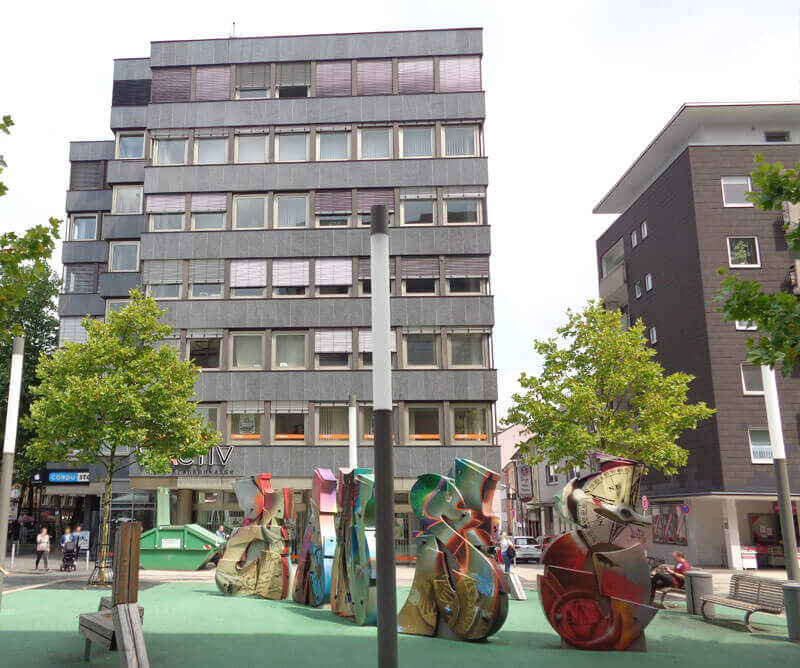
Learning German at a school right in the city centre helps you find your way quickly: our classrooms are at Brüderweg 2, directly by the Reinoldikirche underground stop. Find out more about our courses and the free language café.